
Phone:+86 632 6510078
Phone:+86 632 6510078
Innovations in GMA acrylic powder coatings
Acrylic powder coating is one of the most important powder coating systems. It is well-known to provide a hard, weather-durable coating with good chemical resistance. The GMA acrylic powder coating especially provides exceptional smoothness and clarity (if in clearcoat) that makes it the best choice for automotive clearcoat applications. However, due to certain coating properties, economic, and production issues, acrylic powder coating has not been widely accepted in the general powder coating industry, and its market share in the powder coating industry is still low.
Researchers have been working on many improvements of acrylic powder coating, including new resin design, hardeners, and additives, to overcome its weaknesses, maintain its strengths, and widen its applications not only in automotive applications, but also in low-temperature-cure, architectural, and other applications.
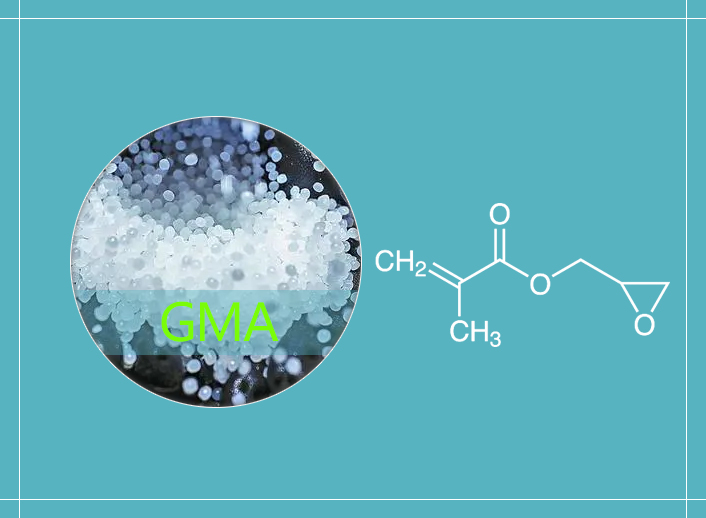
GMA acrylic powder coatings were first introduced in the 1970s. In Japan, acrylic powder coating was first commercially used as a pigmented powder topcoat for Nissan Datsun trucks. In the early 1990s, Harley Davidson in the US started the first commercial application of acrylic powder clear-coat. At about the same time,the pigmented GMA acrylic based powder coatings were also widely used for automotive primer-surfacer and many trim parts. During that time, Mitsui Toatsu Chemicals, now Mitsui Chemicals, transferred its GMA resin production technology to its subsidiary Anderson Development Co. in the US to support the fast growing demand of GMA acrylic powder coatings in automotive applications due to the growing concerns of reducing volatile organic compounds (VOCs) for automotive coatings.
From mid 1990-2000, the Big Three US automakers (Ford, General Motors, and Chrysler) plus major paintmakers formed the Low Emission Paint Consortium (LEPC) and worked together under the same roof in the Ford Wixom Michigan plant.The optimum low emission car body painting system was defined as powder primersurfacer, waterborne basecoat, and powder clear topcoat.
Although car body clear topcoat has not yet become real in the US since that time, BMW did build a full car body powder clear-coat line in 1996 at its Dingolfing plant in Germany.
Quickly, the acrylic based powder clear-coats were expanded to five of BMW’s assembly plants in Germany. Since the 2000s, due to cosmetic and performance advantages, and styling flexibility, aluminum wheels became standard options for most models of cars produced in the US and Europe. Again, due to its high smoothness, clarity, and exceptional weathering durability, GMA acrylic powder coatings found their best fit in automotive aluminum wheel applications.
This application has been quickly spread to all automotive wheel markets globally. Due to this fast-growing application, GMA acrylic powder coatings have gained attention again, and many powder coatings manufacturers along with resin-makers are working closely for new applications.
GMA acrylic powder coating technologies
To better understand GMA acrylic powder coating technologies, here’s a brief review of the resins and hardeners used in this system compared with other thermosetting powder coating systems.
In general, there are five main families of thermosetting powder coating systems.They are Epoxy,Polyester,
Epoxy-Polyester Hybrid,Polyurethane, and Acrylic.Figure 1 shows the basic structure and curing chemistry of
each these five systems.
As shown in Figure 1, acrylic powder coatings include three sub-systems depending on the functional groups in the acrylic resin used.The three types of acrylic resins are hydroxyl functional acrylics (HFA), carboxylic functional acrylics (CFA), and epoxy functional acrylics usually called GMA acrylics. GMA acrylics gotits name due to the use of Glycidyl MethAcrylate monomer for its epoxy functional group.
Depending on the desired resin glass transition temperature (Tg), melt viscosity,flow, geltime, and specific coating cross-linking density or properties, resin-makers might select from very wide ranges of monomers as listed in Table 1, and construct them through free radical polymerization to specific molecular weights.
For GMA powder coating applications, most ofthe GMA acrylic resins contain 10 percent to more than 50 percent of glycidyl methacrylate monomers, which resultin
the acrylic resin having epoxy equivalent weight (EEW) ranging from less than 300 to more than 1,000. Their molecular weight (MW) could range from less than 3,000 to higher than 20,000. That makes the GMA acrylic resin capable of carrying an epoxy functionality from as low as 3-4 to more than 60 in one molecule, completely differentfrom other powder coating systems such as epoxy or polyester, which have 2 or very rarely more than 4 functionalities in one resin molecule.
From this information about resin construction, you can easily understand why GMA acrylic powder coatings can melt and cure much faster than other powder coating systems.The coatings also have much higher cross-linking density, which contributes to good solvent resistance in general. Figure 2 compares the powder melt-curing profile and cross-linking density measured by rheometer between polyester and GMA acrylic powder coatings.
To meet the high-quality demand in automotive applications, GMA acrylic powder coatings manufacturers often work closely with GMA acrylic resin-makers on selecting suitable GMA resin or even designing new GMA resin to optimize the total powder coating formulation, manufacturing process, storage and transportation of the powder coating, baking, and coating performances. Furthermore, the GMA acrylic resin-makers need to have strict process and quality control to supply consistently high quality GMA acrylic resins.Table 2 is a list of commonly used GMA acrylic resins offered by Anderson Development Co.
In general, most of GMA acrylic powder coatings are formulated with dodecanedioic acid (DDDA) as the hardener, although some other chain lengths of dibasic acids, polyanhydrides, or –COOH functional polyester are also used to introduce some specific coating properties.Those powder coating additives such as leveling agents, degassing agents, and UVA/HALS light stabilizer packages used in other powder coating systems are also used in GMA acrylic powder coatings systems. However, the selection and dose of each additive and powder manufacturing process (including final particle size classification) can make the GMA powder coatings very different from one coating manufacturer to another even if the same GMA acrylic resin is used.
Although the coating properties could be very different depending on the coating manufacturing process, examples of coating formulations, process, and expected coating properties are given in Table 3 by using three of Anderson Development’s Almatex GMA acrylic resins.
New aspects of GMA powder coatings
Although GMA acrylic powder coatings offer all of the previously mentioned unique benefits and properties, and have been widely used in various automotive applications plus some agricultural equipment and high end household appliances and hardware items,they are also known as high cost, hard to matt, brittle, and incompatible with other powder coating systems. Due to these concerns, many of powder coatings manufacturers skip this unique powder coating system even though they are aware it could offer them the coating properties they need. After much research, however, innovative resin technologies are available to go along with new hardener and additive technologies to bring in new aspects of GMA acrylic powder coatings in the following areas: Polyester compatibility. By introducing new monomers, GMA acrylic powder coating resins exhibit much improved polyester compatibility. Although no two different powder coating chemistries can be fully compatible, good housekeeping in powder coating operations, or in all coating industry operations for that matter, is always required. The Almatex AP4411 type of GMA acrylic resin does offer the industry much improved polyester compatibility. One of the major powder coatings makers in Europe actually commercialized a new series of polyester compatible GMA acrylic powder coatings in recent years. These new GMA acrylic powders can be manufactured and used along existing polyester powder coating operations with only some better housekeeping required and without the need to build a new production and application line. Figure 3 shows theimprovement of polyester compatibility from AP4411 GMA acrylic resin.Figure 4 also shows examples of two pigmented high- and low-gloss polyester compatible GMA acrylic powder coatings made by a powder coatings manufacturer.
GMA acrylic matting resin. Although using GMA acrylics as matting additives in polyester low gloss powder coatings is not new, batch-to-batch reproducibility, storage stability, and coating burnish resistance still need to be improved. A newly developed Almatex MT2780 GMA acrylic matting resin offers the industry another alternative for producing GMA acrylic-polyester hybrid low gloss powder coatings that are consistent, and have good storage stability and better burnish and solvent resistance. Table 4 gives examples of the wide ranges of acrylic-polyester hybrid low gloss powder coatings that could be made with this new acrylic matting resin.
Low-temperature cure. Compared with other powder coating systems, GMA acrylic powder coatings already carry relatively lower temperature cure. As reported,the automotive full body clear powder coating were cured at 145°C while most of the other powder coating systems were cured at 180°C or higher. To further reduce GMA powder coating curing temperature to 130°C and lower, it is required to optimize the selection of GMA resin, hardeners, and catalyst to ensure that the powder can melt, flow, and cure sufficiently.
Furthermore, the selection and dose of catalyst should not reduce the powder shelf life to an unacceptable limit.
It would require both resin and powder coatings manufacturers to work together closely to come out with an acceptable industrial low temperature cure powder coating. Figure 5 includes an example of a prototype of a GMA powder coating cured at 125°C on an automotive bumper.
Other improved GMA powder coatings. By using new GMA resin design, new hardeners, or special additives,GMA acrylic powder coatings can also be more corrosion resistant and flexible with high mar/scratch resistance.They can also accept high pigmentload or further extend weather durability well beyond conventional levels. Figure 6 shows some of these improvements.
The same as other technologies, GMA acrylic powder coating has its strengths and weaknesses as introduced in this article. Through continuous research from resin and other supporting raw materials suppliers and powder coatings manufacturers, GMA acrylic powder coatings can keep finding new fits in powder coating applications. We can expect that these powder coatings can be more acceptable in the future of innovation in thepowder coating industry.

 +86 13176033723

 ↑ Top
↑ Top